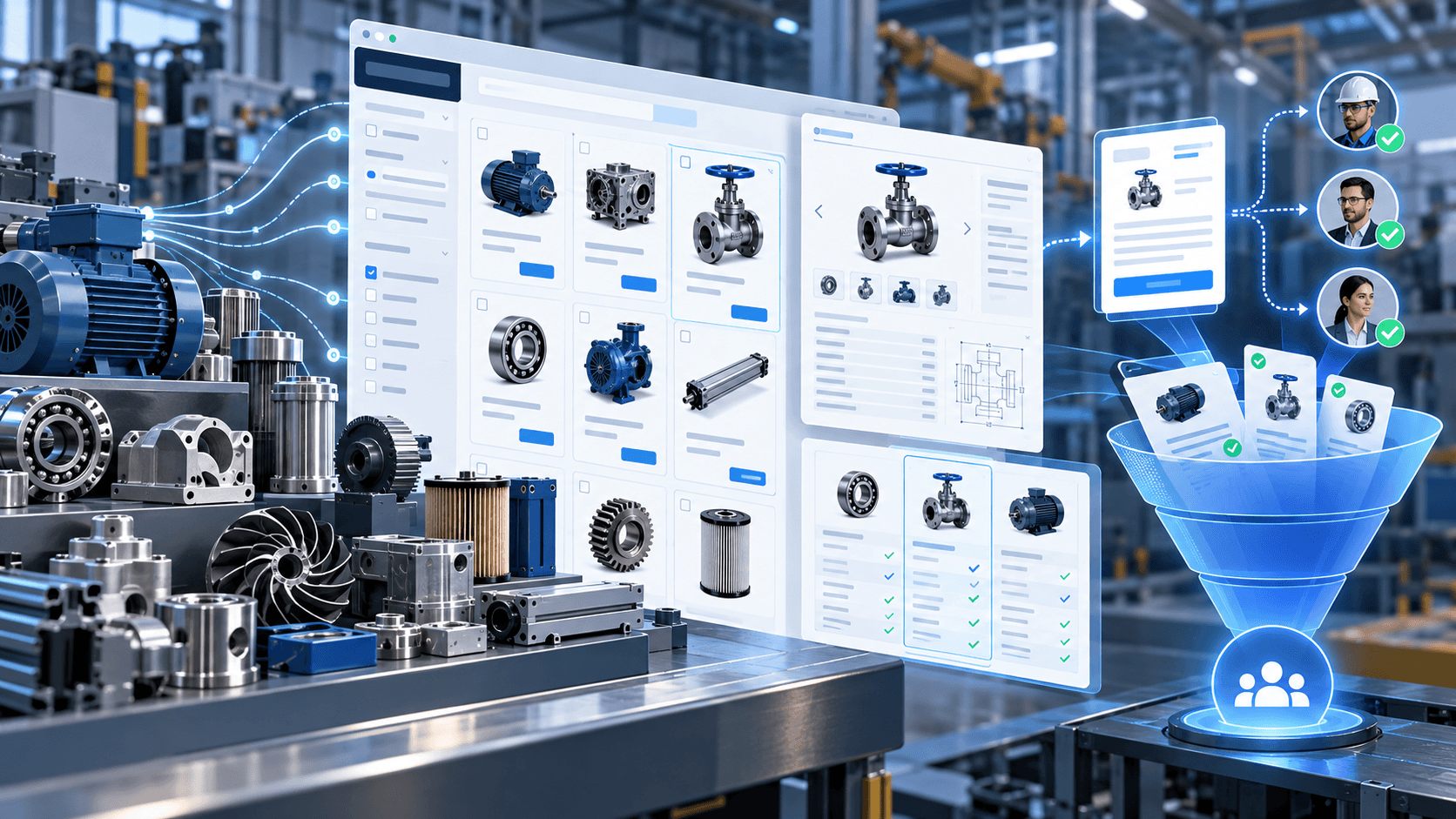
Ecommerce SEO Breakdown: How Category Structure Affects Sales Inquiries

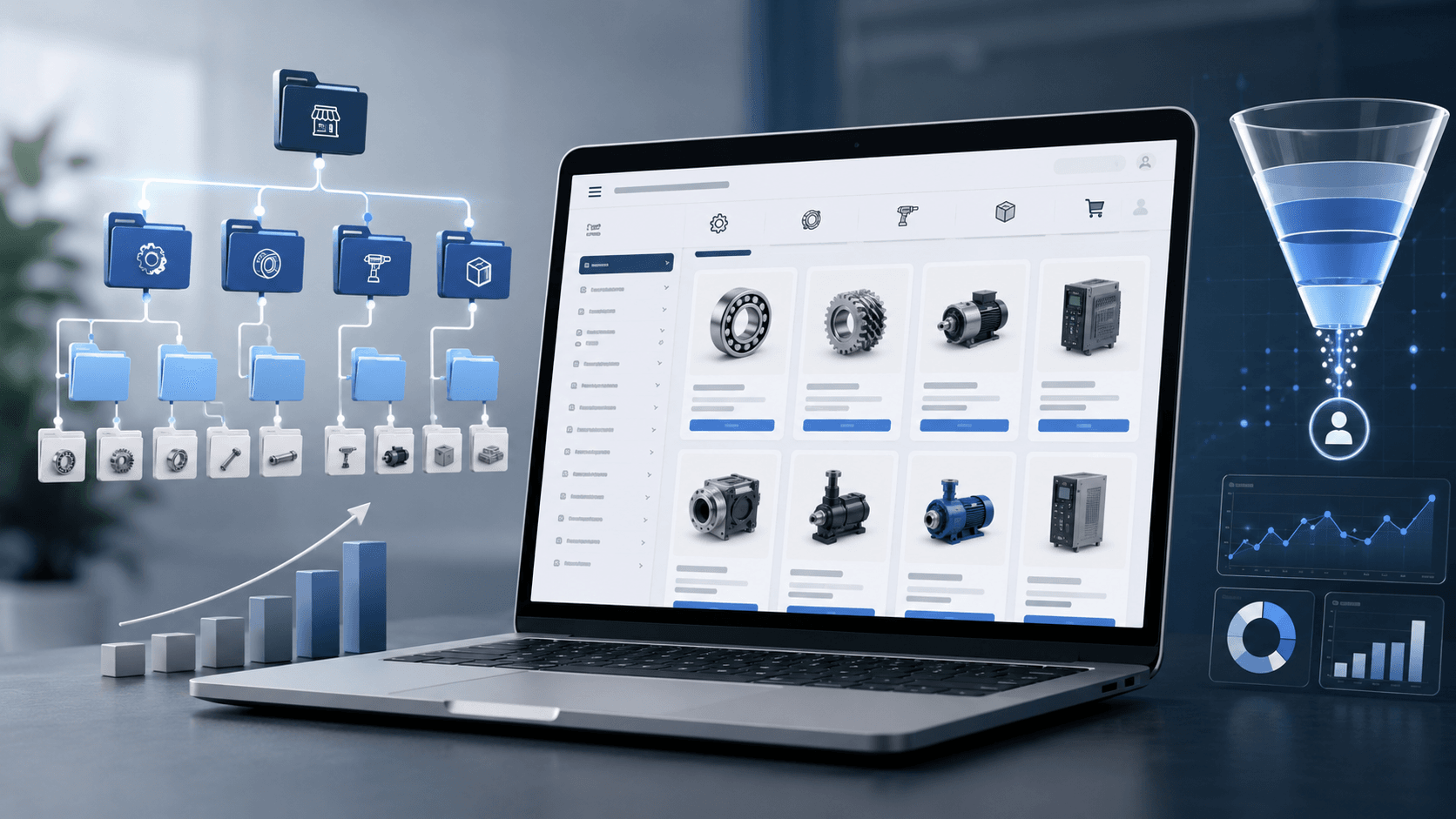
Many ecommerce websites focus on product pages, product descriptions, and advertising campaigns, but ignore one of the most important parts of organic growth: category structure.
For ecommerce SEO, categories are not just navigation elements. They are strategic landing pages that help Google understand your product range and help buyers find what they need faster.
When category structure is weak, even a store with good products can struggle to generate qualified traffic, quote requests, and sales inquiries.
In this ecommerce SEO breakdown, we explain how category structure affects visibility, buyer intent, user experience, and conversions.
Why Category Structure Matters for Ecommerce SEO
Category pages often target broader commercial keywords than individual product pages.
For example, a product page may rank for a specific model, while a category page can rank for a product group, product type, or buyer-intent query.
This is especially important for:
- B2B ecommerce stores;
- industrial product suppliers;
- technical equipment stores;
- OpenCart and WooCommerce stores;
- stores selling complex product ranges;
- companies targeting buyers in the US and Europe.
If categories are poorly structured, Google may not clearly understand which pages should rank for commercial searches.
The Business Problem: Traffic Without Sales Inquiries
A common situation looks like this:
- the store has hundreds or thousands of products;
- Google indexes product pages;
- some blog articles get traffic;
- category pages receive weak visibility;
- buyers browse but do not send inquiries;
- paid traffic becomes expensive because organic traffic is weak.
In many audits, the issue is not the product catalog itself. The issue is how the catalog is structured for search engines and buyers.
When category pages are thin, duplicated, confusing, or overloaded with filters, ecommerce SEO performance becomes unstable.
How Buyers Use Categories
Not every buyer knows the exact product model they need.
Many buyers search by:
- product type;
- application;
- industry;
- technical specification;
- material;
- compatibility;
- use case;
- brand or manufacturer.
A strong category structure helps different buyer types find the right product path.
For example, a technical buyer may search for a specific part type, while a procurement manager may search for a supplier category. Your category structure should support both.
Common Category Structure Problems
1. Categories Are Too Broad
If categories are too broad, they become difficult to rank and difficult to use.
For example, a category like “Equipment” is usually too general.
Better structure may include:
- Industrial Measurement Equipment;
- Automation Components;
- Hydraulic Parts;
- Electrical Control Units;
- Spare Parts for Manufacturing Lines.
More specific categories often match search intent better and convert more qualified visitors.
2. Categories Are Too Deep
Too many levels can make products hard to find.
If important categories are buried four or five clicks away from the homepage, both users and search engines may treat them as less important.
A clean ecommerce structure usually keeps important commercial categories close to the homepage.
3. Duplicate Categories Compete with Each Other
Some stores create similar categories with slightly different names.
For example:
- Industrial Sensors;
- Sensors for Industry;
- Factory Sensors;
- Automation Sensors.
If these pages target the same intent, they may compete with each other instead of strengthening one main category page.
4. Category Pages Have No Unique Content
Many ecommerce category pages show only product grids.
That may be enough for users who already know what they want, but it is often weak for SEO and conversion.
Useful category content can explain:
- what products are included;
- how to choose the right product;
- key specifications;
- common applications;
- delivery or support options;
- why buyers should trust the supplier.
5. Filters Create Index Bloat
Filters are useful for users, but dangerous for SEO when uncontrolled.
Filtering by size, brand, price, color, compatibility, and availability can generate thousands of URL combinations.
Some filtered pages may deserve indexation. Most should not.
If Google indexes too many low-value filter URLs, important category pages may lose focus.
What a Strong Ecommerce Category Structure Looks Like
A strong structure balances SEO, user experience, and buyer intent.
It should usually include:
- clear top-level categories;
- logical subcategories;
- commercially valuable landing pages;
- controlled filters;
- unique category content;
- strong internal linking;
- clean URLs;
- relevant product grouping.
The goal is to help both Google and buyers understand the product catalog quickly.
Category Pages as Commercial Landing Pages
For many ecommerce stores, category pages should act as commercial landing pages.
This means they should not only list products. They should help buyers evaluate the category and move toward action.
Important elements include:
- clear H1 heading;
- short category introduction;
- product filters that help selection;
- internal links to related categories;
- trust signals;
- delivery or support information;
- request quote or contact CTA;
- FAQ section for buyer questions.
For B2B ecommerce, category pages can also include quote request buttons, technical consultation CTAs, or bulk order information.
How Category Structure Affects Sales Inquiries
Category structure affects conversion because it shapes the buyer journey.
If categories are confusing, buyers may not find the right product group. If categories are too thin, visitors may not trust the store. If filters create duplicate URLs, Google may rank weak pages instead of commercial category pages.
A better structure can improve:
- organic visibility;
- product discovery;
- buyer confidence;
- internal linking;
- quote requests;
- conversion from category to product page;
- overall ecommerce revenue potential.
In technical ecommerce, the category page often becomes the bridge between search intent and sales inquiry.
SEO Audit Process for Ecommerce Categories
Step 1: Export All Categories
Create a complete list of category and subcategory URLs.
Review their hierarchy, URL structure, traffic, impressions, and indexation status.
Step 2: Map Keywords to Categories
Each important category should have a clear keyword intent.
If several categories target the same keyword, consolidation may be needed.
Step 3: Identify Missing Commercial Pages
Some stores have products for valuable searches but no dedicated category page for that intent.
This is a missed SEO opportunity.
Step 4: Review Internal Linking
Important categories should receive links from:
- homepage;
- main navigation;
- related categories;
- product pages;
- blog articles;
- buying guides;
- footer or resource sections where relevant.
Step 5: Control Filter Indexation
Decide which filtered pages deserve indexation and which should be noindexed, canonicalized, or excluded from crawling paths.
This is especially important for OpenCart and WooCommerce stores.
Real-World Scenario
We often see ecommerce websites where product pages exist, but category structure does not support search demand.
The store may have hundreds of relevant products, but Google cannot clearly understand which category page should rank for high-value commercial searches.
After restructuring categories, improving category content, cleaning duplicate URLs, and strengthening internal linking, the store can become much easier for both users and search engines to understand.
This does not guarantee instant traffic growth, but it creates a stronger foundation for ecommerce SEO and sales inquiries.
Ecommerce Category Structure Checklist
- Top-level categories are clear and commercially relevant.
- Subcategories match real buyer intent.
- Important categories are not buried too deep.
- Duplicate categories are consolidated.
- Category pages have unique content.
- Filters are controlled for SEO.
- Internal links support priority categories.
- Category URLs are clean and consistent.
- Each important category has a clear CTA.
- Category pages support both SEO and conversion.
FAQ
Do ecommerce category pages matter for SEO?
Yes. Category pages often target valuable commercial keywords and help search engines understand the structure of the product catalog.
Should category pages have text content?
Yes. Useful category content can improve relevance, help buyers choose products, and support SEO visibility.
Can filters hurt ecommerce SEO?
Yes. Uncontrolled filters can create duplicate URLs, index bloat, and weak pages that dilute SEO signals.
How deep should ecommerce categories be?
Important commercial categories should be easy to reach. If key pages are buried too deeply, they may receive less authority and fewer visits.
Conclusion
Ecommerce category structure directly affects SEO visibility, product discovery, and sales inquiries.
If categories are too broad, duplicated, thin, or buried too deep, the store may struggle to attract qualified buyers even with a large product catalog.
A proper ecommerce SEO audit can reveal which categories should be improved, consolidated, expanded, or protected from duplicate URL problems.
If your ecommerce store receives traffic but generates few sales inquiries, our team can review category structure, internal linking, filter indexation, and conversion paths to identify what blocks growth.
You may also want to read our articles about OpenCart duplicate URL cleanup, index bloat, and cleaning junk URLs from Google index before SEO growth.