OpenCart Development for European Online Stores Selling Complex Products

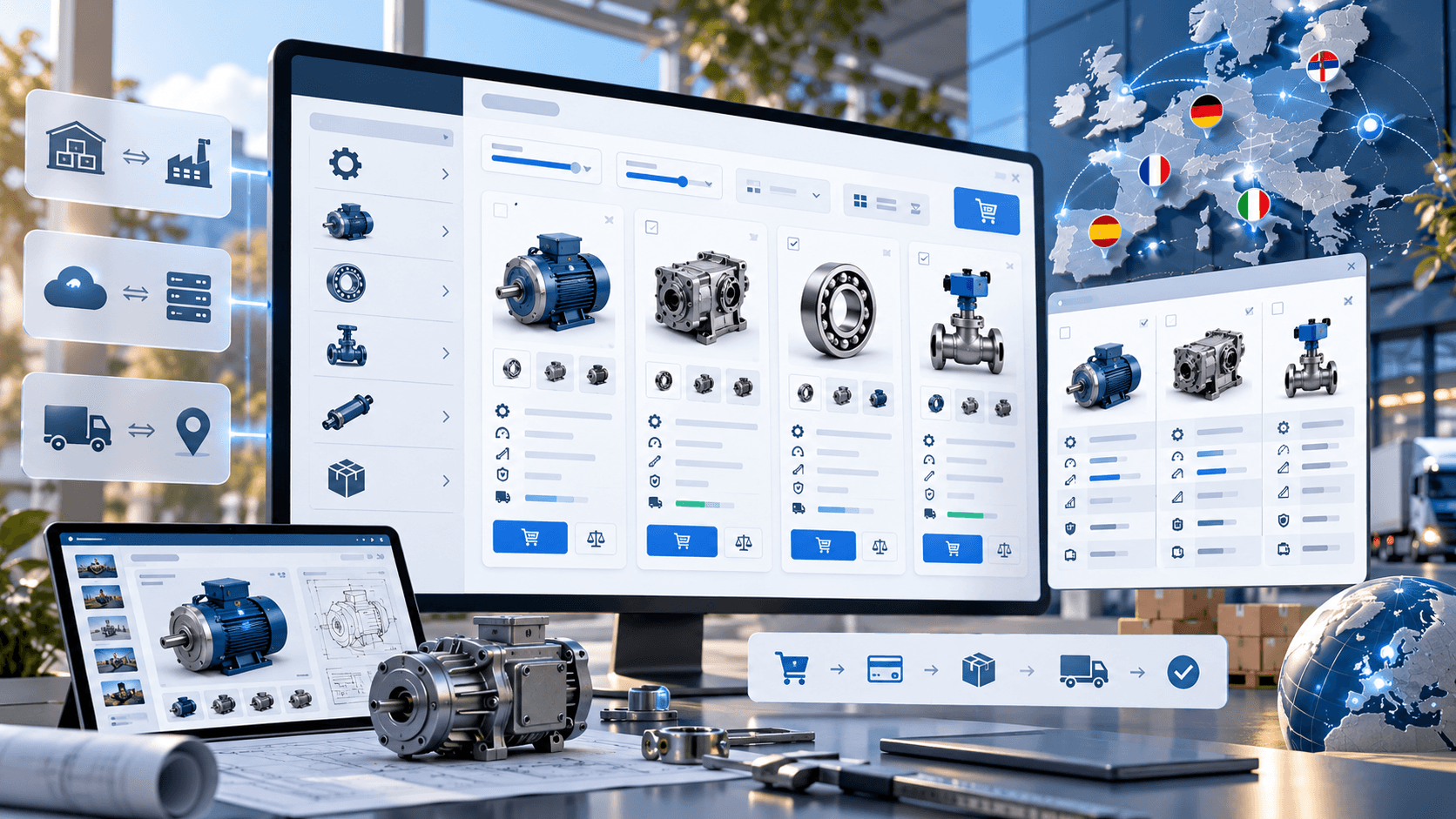
OpenCart can work very well for European ecommerce businesses, especially when the store needs more flexibility than a simple catalogue-and-checkout setup.
But stores selling complex products have very different requirements from a typical fashion, cosmetics, or consumer goods shop.
The catalogue may include thousands of SKUs, technical parameters, product variants, compatibility rules, different customer groups, multilingual content, regional delivery options, B2B pricing, and integrations with external systems.
In that environment, OpenCart development is not just about installing a theme and uploading products.
The real challenge is building an ecommerce architecture that helps buyers find the correct product, gives search engines a clean structure, supports internal business processes, and remains manageable as the catalogue grows.
When OpenCart Is a Good Fit for Complex Ecommerce
OpenCart is often a practical option for businesses that need a customizable ecommerce platform without moving immediately to a large enterprise stack.
It can be especially suitable when the store needs:
- a large product catalogue;
- custom product attributes;
- advanced filters;
- multiple languages;
- multiple currencies;
- customer groups;
- individual pricing logic;
- ERP or CRM integration;
- custom delivery methods;
- product feed integrations;
- marketplace connections;
- SEO control at category and product level.
The platform itself is only the foundation.
The quality of the final store depends on how catalogue logic, extensions, custom development, database structure, SEO, performance, and integrations are designed around the business.
The Main Problem Is Usually Not OpenCart — It Is Poor Architecture
Complex ecommerce projects often become difficult because development starts from individual features instead of a complete system.
The business asks for:
- another filter;
- another product field;
- another module;
- a marketplace export;
- a custom checkout option;
- a new language;
- a separate price group.
Each request may make sense individually.
But after dozens of separate modifications, the store can become slow, difficult to maintain, and inconsistent.
A better approach is to define the catalogue and business architecture before adding extensions.
This is particularly important for European stores that may later expand into several markets.
Start with the Product Data Model
For stores selling technical or configurable products, the product data model is one of the most important development decisions.
Before creating category pages or filters, determine how product information should be stored.
That may include:
- SKU;
- manufacturer;
- series;
- technical attributes;
- dimensions;
- materials;
- compatibility;
- voltage;
- capacity;
- colour;
- weight;
- certifications;
- availability;
- related accessories;
- replacement models.
Some values should be product attributes. Others may require options, custom fields, linked entities, or external synchronization.
If everything is stored as free text, filtering and comparison become difficult later.
If every technical property is turned into a product option, administration can become unnecessarily complicated.
The data model should reflect how products are searched, compared, purchased, and maintained.
Category Architecture Should Follow Buyer Intent
A complex catalogue should not simply reproduce warehouse or ERP categories on the website.
Customers may think about products differently from internal staff.
For example, buyers may navigate by:
- product type;
- application;
- industry;
- technical characteristic;
- manufacturer;
- compatibility;
- use case.
A European electronics store might internally classify products by supplier, while buyers search by voltage, device type, protocol, or compatibility.
An industrial parts store may organize inventory by internal product families, while customers search for a component that fits a specific machine.
The ecommerce architecture should bridge these two worlds.
Internal systems can retain their operational structure, while OpenCart presents a buyer-friendly catalogue on the frontend.
Advanced Filters Need Both UX and SEO Planning
Filters are essential for complex products.
A catalogue containing hundreds of technically similar items is difficult to use without them.
Good filters may include:
- brand;
- price;
- size;
- technical specification;
- material;
- compatibility;
- power;
- capacity;
- product type;
- availability.
But filters also create one of the biggest technical risks in OpenCart ecommerce: uncontrolled URL generation.
If every combination of filters, sorting options, pagination, and parameters becomes indexable, Google can discover thousands of low-value pages.
That can weaken category visibility and create unnecessary crawl complexity.
The development specification should therefore define:
- which filtered pages users need;
- which filtered pages have real search demand;
- which URLs should be indexable;
- which should be canonicalized;
- which should remain outside the search index;
- how internal links should point to category and filter pages.
This is much easier to plan during development than to clean up after the store has already been indexed.
Product Pages Should Help Buyers Make Technical Decisions
For complex products, a product page is more than a sales card.
It may function as a technical reference page.
Depending on the catalogue, a strong product page can include:
- clear product title;
- SKU or model number;
- high-quality images;
- key specifications;
- complete attribute table;
- available options;
- compatibility information;
- technical documentation;
- downloadable manuals;
- related products;
- accessories;
- availability;
- delivery information;
- price or quote request;
- structured data.
The product page should answer the questions buyers need before making a decision.
If critical information is hidden in PDFs or available only after contacting support, the store creates unnecessary friction.
Product Variants Need a Clear Strategy
Complex catalogues often contain many versions of essentially the same product.
For example:
- different sizes;
- different voltages;
- different capacities;
- different materials;
- different colours;
- regional versions;
- different connector types.
The development team needs to decide whether these should exist as:
- one product with selectable options;
- separate product pages;
- linked variations;
- a configurable product structure.
There is no universal answer.
The decision should consider:
- how users search;
- whether variants have different SKUs;
- whether prices differ;
- whether stock is tracked separately;
- whether search demand exists for individual variants;
- how external systems represent the products.
Getting this wrong can create duplicate pages, confusing inventory logic, and difficult administration.
Multilingual Development Should Be Planned from the Start
European ecommerce stores often need more than one language.
Adding languages after thousands of products have already been created can become expensive and messy.
Before development, define how the store will handle:
- category translations;
- product names;
- product descriptions;
- technical attributes;
- filter labels;
- SEO metadata;
- URL structure;
- hreflang;
- customer emails;
- checkout text;
- policy pages;
- technical documentation.
Some technical values should remain identical across languages, while labels and explanatory content require translation.
This distinction becomes particularly important when product data is synchronized from ERP, PIM, or supplier feeds.
European Expansion Requires More Than Translation
A store selling into several European markets may also need different commercial logic.
Depending on the business, this can include:
- regional delivery methods;
- different currencies;
- different tax presentation;
- country-specific payment methods;
- different product availability;
- regional contact information;
- market-specific policies;
- localised landing pages.
The platform architecture should allow the business to expand without copying the entire store every time a new country is added.
At the same time, forcing every country into exactly the same structure can also create limitations.
The right implementation depends on whether the store operates as one European business or as several regional sales operations.
B2B Features Can Be Added Without Turning the Store into Enterprise Software
Some European OpenCart stores serve both consumers and business customers.
Others operate primarily in B2B markets.
Useful B2B features may include:
- customer-specific price groups;
- wholesale pricing;
- quantity discounts;
- minimum order quantities;
- RFQ functionality;
- company registration fields;
- VAT information;
- saved product lists;
- repeat ordering;
- restricted product groups;
- account manager workflows.
The important point is to implement features that match the actual sales process.
A B2B store does not automatically need every enterprise ecommerce feature available.
Unnecessary complexity increases development cost and future maintenance.
ERP Integration Should Have a Clear Source of Truth
Integration becomes critical when product information changes frequently.
The store may exchange data with:
- ERP;
- CRM;
- PIM;
- warehouse software;
- accounting systems;
- supplier feeds;
- marketplaces.
Before development, define which system owns each type of data.
For example:
- ERP may own stock and base pricing;
- PIM may own product descriptions and attributes;
- OpenCart may own website-specific SEO content;
- CRM may own sales lead status.
Without a clear source of truth, the same field may be edited in several systems and overwritten during synchronization.
This becomes increasingly dangerous as the catalogue grows.
Marketplace and Product Feed Integrations Need Clean Product Data
European online stores may also sell through marketplaces, price comparison websites, advertising platforms, or merchant feeds.
OpenCart may need to provide data to:
- Google Merchant Center;
- comparison platforms;
- marketplaces;
- affiliate systems;
- regional ecommerce channels.
If product data is inconsistent in the store, every external feed inherits the same problem.
A clean data model improves:
- feed generation;
- product matching;
- availability synchronization;
- advertising campaigns;
- marketplace exports.
Feed requirements should therefore be considered when product attributes are designed.
OpenCart Extensions Should Be Selected Conservatively
OpenCart has a large ecosystem of extensions.
This is an advantage, but it can also become a weakness when every business requirement is solved by installing another module.
Too many poorly selected extensions can create:
- performance problems;
- conflicting modifications;
- upgrade difficulties;
- security risks;
- duplicate functionality;
- administration complexity.
Before installing an extension, check whether the requirement can be solved by:
- existing OpenCart functionality;
- a reliable extension;
- a small custom modification;
- a broader architectural change.
The cheapest module today can become an expensive technical dependency later.
Performance Matters More as the Catalogue Grows
A store with 100 products behaves differently from one with 50,000 products.
Performance planning should consider:
- database queries;
- filter logic;
- search performance;
- image volume;
- cache configuration;
- server resources;
- third-party scripts;
- integration jobs;
- large category pages.
Complex filters and poorly optimized modules can create significant server load.
Performance should be tested with realistic catalogue size and traffic expectations rather than only on an almost empty development store.
Mobile UX Cannot Be an Afterthought
Even complex B2B or technical catalogues receive mobile traffic.
That does not mean every buyer completes the purchase on a phone.
But buyers may:
- check product specifications;
- open a link from email;
- compare a model during a meeting;
- send a quick RFQ;
- check stock or delivery information.
Filters, specification tables, product options, and technical documents need to remain usable on smaller screens.
Simply shrinking the desktop interface is rarely enough.
SEO Should Be Part of OpenCart Development, Not an Add-On
For complex catalogues, many SEO problems are structural.
They cannot be solved properly with meta tags alone.
Development should account for:
- clean product URLs;
- category URLs;
- canonical tags;
- filter indexation;
- pagination;
- duplicate product paths;
- structured data;
- XML sitemap logic;
- internal linking;
- multilingual URLs;
- redirects;
- out-of-stock product handling.
This is particularly important when migrating an existing store.
A visually successful rebuild can still damage organic revenue if old URLs, rankings, and product signals are not protected.
Analytics Should Track the Real Ecommerce Journey
Basic pageview tracking is not enough for a serious ecommerce project.
Depending on the sales model, useful events may include:
- product views;
- filter use;
- searches;
- add-to-cart events;
- checkout starts;
- purchases;
- RFQ submissions;
- technical document downloads;
- account registrations;
- phone or email contacts.
For B2B stores, CRM integration can be especially valuable because a website inquiry may generate revenue weeks or months later.
The business should be able to distinguish between traffic and commercially valuable activity.
What Should Be Defined Before Development Starts?
A complex OpenCart project becomes much easier when the key requirements are documented before coding begins.
The specification should define:
- catalogue hierarchy;
- product data model;
- attributes and options;
- filter logic;
- customer groups;
- pricing rules;
- languages;
- currencies;
- checkout logic;
- delivery methods;
- payment methods;
- ERP and CRM integrations;
- product feeds;
- SEO requirements;
- analytics events;
- migration requirements;
- expected catalogue size.
This reduces the risk of redesigning core functionality halfway through development.
OpenCart Development Checklist for Complex European Stores
- Product data structure is defined before catalogue import.
- Categories reflect customer search behaviour.
- Technical filters use structured attributes.
- Filter URL indexation is controlled.
- Product variant logic is clearly defined.
- Product pages contain sufficient technical information.
- Multilingual architecture is planned from the start.
- Country-specific commercial requirements are documented.
- B2B functionality matches the real sales process.
- ERP, CRM, or PIM sources of truth are defined.
- Marketplace and advertising feeds use clean product data.
- Extensions are selected carefully.
- Performance is tested with realistic catalogue size.
- Mobile product selection is usable.
- SEO requirements are included in development.
- Analytics tracks purchases, RFQs, and other valuable actions.
FAQ
Is OpenCart suitable for a large product catalogue?
It can be, but catalogue size alone is not the only factor. Database structure, filters, modules, server resources, integrations, and custom code all affect how well a large store performs.
Can OpenCart support B2B and retail customers in the same store?
Yes. Customer groups, pricing rules, account logic, quantity discounts, RFQ functionality, and custom workflows can support hybrid B2B and B2C models when implemented carefully.
Should filters be indexed by Google?
Only selectively. Some filtered landing pages can have genuine search value, but allowing every filter combination to be indexed can create large numbers of duplicate or low-value URLs.
When should ERP integration be planned?
Before development architecture is finalized. Product ownership, pricing, stock, customer data, and synchronization rules can affect the entire store structure.
Conclusion
OpenCart can be a strong platform for European stores selling complex products, but the project needs more than a standard ecommerce setup.
Product data, categories, technical filters, variants, multilingual content, B2B logic, integrations, performance, SEO, and analytics should be designed as one connected system.
The earlier these decisions are made, the easier the store becomes to manage, scale, and optimize.
If you are planning a new OpenCart store or rebuilding an existing complex catalogue, our team can review the product architecture, integrations, SEO requirements, and sales workflows before development starts.
You may also want to read our articles about OpenCart duplicate URL cleanup, ecommerce category architecture, Merchant Center preparation, and B2B manufacturing ecommerce development.